

How we hit 14%+ conversion rate on SaaS pricing pages
Your pricing page is where buyers decide. If it feels risky or confusing, they leave. Fix that first.
Pricing
2 January
Author:
Why pricing pages win or kill revenue?
For many SaaS sites, the pricing page is the last stop before a signup, demo, or “talk to sales.”
If the page has low trust, unclear plan choice, or weak value, you lose high-intent traffic. Userpilot calls pricing-page optimization “particularly important” because complicated pricing drives leads away.
The Pricing-First CRO framework we use
This is the same playbook we use across SaaS pages, but pricing is where it pays back fastest.
Step 1: Make the plan choice feel safe
Most buyers fear picking the wrong plan more than they fear price.
So we remove doubt with:
clear “who it’s for” per plan
a simple comparison (not a feature dump)
a short “best for most teams” nudge
Step 2: Put trust where the decision happens
Trust has to sit near the price, not buried in a footer.
Common trust blocks:
logo wall
short customer quote
“trusted by X teams” line
Trust signals reduce perceived risk and help conversions.
Step 3: Add an annual option that makes sense
Annual plans help cash flow and can reduce churn.
But do not over-discount just to force it. Heavy discounting can hurt long-term value and upgrades.
Step 4: Use social proof nudges ethically
Social proof works because people look at what others do when they are unsure.
That is why “Most popular” works when it is true and backed by real data.
Step 5: Test, do not guess
A/B testing is how you turn “best practice” into “what works for our buyers.”
The 3 changes that took WotNot’s pricing page to ~14% CVR
Here’s what mattered. Not design trends. Not animations. Just buyer psychology.
1) “Trusted by companies worldwide” in the first view
Before: no quick reason to believe.
After: trust line + logos near the plans.
Why it works: buyers need safety signals at the decision point.
2) Annual savings shown as a simple number
Before: monthly pricing with no clear reason to go annual.
After: “Save $X per year” type message.
Why it works: annual billing improves cash flow for the SaaS, and savings feels like a “smart choice” to the buyer.
3) The “most picked” plan is clearly highlighted
Before: all plans looked equal, so the buyer had to think too much.
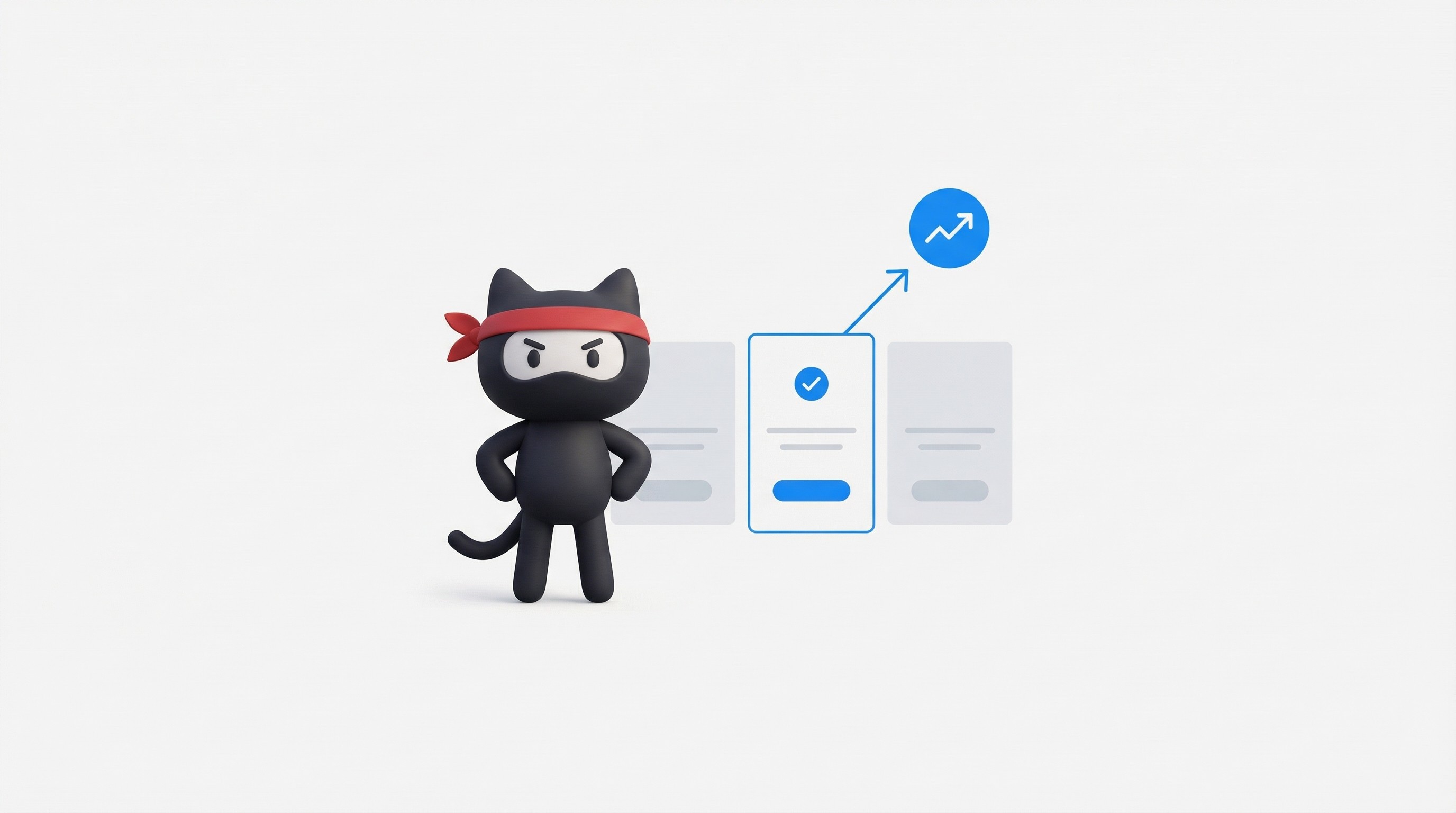
After: the middle plan was positioned as the safe default with a pick-rate style nudge.
Why it works: social proof reduces decision stress and pushes action.
“14% CVR on every SaaS landing page” reality check
We aim for strong ranges on high-intent pages, but CVR depends on:
traffic intent (cold vs warm)
offer strength
price and market maturity
speed and clarity of onboarding
What we can control is the system that gives you the best shot.
The simple checklist we run on every high-intent page
What to fix | What it should do | Where it goes |
|---|---|---|
Trust block | Remove risk fast | Above the fold or near pricing |
Plan clarity | Help buyers self-select | Inside each plan card |
“Most picked” nudge | Reduce decision stress | On the plan you want to sell |
Annual savings | Make upgrade feel smart | Toggle + inside plan |
FAQ | Kill the top objections | Under pricing table |
A/B test plan | Prove what works | Run 1 change at a time |
5 A/B tests that usually move pricing CVR
Start here if you already have decent traffic.
Trust line placement (top vs near CTA)
“Most popular” plan highlight (on vs off)
Annual toggle default (monthly default vs annual default)
Savings framing (“save $X” vs “2 months free”)
Plan copy rewrite (who it’s for, in plain words)
Common mistakes we see (and fix fast)
Too many bullets, no decision help
No proof near the price
“Contact sales” as the only option for mid-market
Plans based on features only, not outcomes
Annual option hidden or confusing
Where UnOptimised fits
If your site already gets traffic (SEO or paid), the fastest growth is usually not “more clicks.”
It’s making your high-intent pages convert.
If you want the broader system behind this, link this post with:
A 14%+ pricing page is not luck. It is a repeatable system: make the plan choice feel safe, put trust next to the decision, show a clear annual value, use social proof to reduce doubt, then A/B test to lock in gains. Pricing pages are the final step for many buyers, so even small changes can turn existing traffic into real signups and revenue.

UnOptimised
4.8/5.0 RATING
The CRO agency for B2B SaaS teams stuck at low conversion rates | Revenue growth from $100K → $4M+ ARR for SaaS teams.